JavaScript is required to view this site.
Please enable JavaScript and reload the page.

Official Website

Francesca Bellettini

President and Chief Executive Officer of Gucci Appointed September 2025

A career built at the meeting point of financial discipline and creative industry — from investment banking in London to the leadership of one of the defining houses in global luxury.

Francesca Bellettini, President and Chief Executive Officer of Gucci, in an editorial portrait

Francesca Bellettini
President & Chief Executive Officer, Gucci

Leadership · Strategy · Luxury · Culture Begin

01 A Global Leadership Journey

A career shaped by the distance between a spreadsheet and a studio.

  • Investment bankingLondon · Early career
  • Prada GroupBusiness planning & development
  • Helmut LangOperations
  • GucciFrom 2003
  • Bottega VenetaFrom 2008
  • Saint LaurentFrom 2013
  • KeringFrom 2023
  • GucciFrom 2025

Francesca Bellettini's professional life has followed a single, deliberate line. It began in London, in investment banking — a discipline of models, valuation and evidence. It now rests at the head of Gucci, one of the most widely recognised names in global luxury, where she was appointed President and Chief Executive Officer in September 2025.

What connects those two points is the route taken between them. Rather than arriving in fashion from the outside, she moved through the operating centre of the industry: business planning and development at the Prada Group, then operations at Helmut Lang. In 2003 she joined Gucci as Strategic Planning Director and Associate Worldwide Merchandising Director — two functions that sit precisely where commercial reasoning meets product.

In 2008 she moved to Bottega Veneta, becoming Worldwide Merchandising and Communications Director in 2010: a remit that joined what a house makes to how a house speaks. From 2013 she served as President and Chief Executive Officer of Saint Laurent, and in September 2023 was appointed Deputy Chief Executive Officer of Kering with responsibility for brand development across the group.

Read as a sequence, the record describes a particular kind of executive education — one assembled from the inside of the business rather than observed from above it. Strategy, merchandising, operations, communications and general management are not separate stations on this route. They are the same discipline, encountered at successively larger scale.

Read the executive profile

02 The Intersection of Creativity and Strategy

Creative direction and business strategy are not two conversations.

An examination of how creative identity, brand architecture and organisational leadership behave as a single system inside a luxury house.

  1. 01

    Creative direction as an operating decision

    In a luxury house, a creative appointment is rarely only an aesthetic choice. It sets the product architecture, the price ladder, the retail environment, the communication register and the hiring profile of an entire organisation for several years. The consequence of that choice is felt in supply chains and store planning long before it is felt on a runway.

  2. 02

    Brand identity as long-duration capital

    A house's identity is among the slowest assets in the business and among the fastest to damage. It is accumulated over decades through consistency of product, image and behaviour, and it can be diluted within a season by over-extension. Managing it well means accepting that some of the most valuable decisions a leadership team takes are decisions not to act.

  3. 03

    Strategy expressed as constraint

    Strategic clarity in luxury tends to show itself in refusal: the categories a house declines to enter, the distribution it declines to accept, the volume it declines to chase. Discipline of this kind is only sustainable when the commercial reasoning behind it is understood across the organisation rather than held at the top of it.

  4. 04

    Organisation as the transmission mechanism

    Between an idea and a customer stand merchandising, production, retail, communication and finance. The quality of a creative intention is therefore bounded by the quality of the organisation carrying it. This is why executive leadership in creative industries is frequently a question of translation: making an aesthetic position legible as a set of operating decisions.

Industry Context This section is general analysis of how creative and commercial functions relate within luxury companies. It is presented as editorial commentary and is not attributed to Francesca Bellettini.

03 Career in Luxury

Seven chapters, one continuous argument.

The professional record, read as chapters rather than dates — each one adding a different instrument to the same practice.

Chapter I

Investment Banking, London

The career began in London as an investment banker. It is a training that leaves a durable habit: the expectation that a proposition should be defensible in numbers, and that the numbers should be interrogated before they are believed.

Chapter II

Prada Group

Work in the Business Planning and Development division — the function that sits between corporate ambition and what an operating business can actually carry. It is where strategy stops being a document and becomes a plan with a calendar attached.

Chapter III

Helmut Lang

Operations Manager. A house of pronounced creative identity, encountered at the level of how it actually runs. Operational responsibility of this kind teaches the cost of every intention: what a decision requires of the people and systems that have to deliver it.

Chapter IV

Gucci

Joined in 2003 as Strategic Planning Director and Associate Worldwide Merchandising Director. The pairing is unusual and instructive — planning gives the long view, worldwide merchandising gives the granular one, and holding both prevents either from drifting into abstraction.

Chapter V

Bottega Veneta

Joined in 2008, becoming Worldwide Merchandising and Communications Director in 2010. Merchandising and communications under one remit is a structural statement: what a house offers and what a house says are treated as a single proposition rather than two departments.

Chapter VI

Saint Laurent

President and Chief Executive Officer from 2013. A tenure of more than a decade at the head of a single house — long enough for decisions to be tested by their own consequences, which is the rarest condition in modern brand management.

Chapter VII

Kering, then Gucci

Appointed Deputy Chief Executive Officer of Kering in September 2023, in charge of brand development across the group. In September 2025, Kering announced her appointment as President and Chief Executive Officer of Gucci — a return to the house where her Kering career began, at its head.

Open the full career journey

04 Leadership Philosophy

The themes below are drawn from the shape of the roles held — not from statements attributed to her.

A career can be read as an argument about what leadership requires. These are the themes that the sequence of appointments makes visible.

i

Proximity to the work

Strategic planning, merchandising, operations and communications are all positions from which the actual mechanics of a house are visible. Leadership formed in those functions tends to be specific rather than declarative, because it has had to answer for the details.

ii

Duration as a discipline

More than a decade at the head of one house is a materially different experience from a short tenure. It requires that a leader live inside the second- and third-order effects of their own decisions, and it makes long-horizon thinking a practical necessity rather than a stated value.

iii

Translation between languages

Creative organisations run on two vocabularies that do not naturally reconcile: one of image, instinct and meaning, one of margin, sell-through and capital. A background that spans banking, planning and brand leadership is, in practice, a background in moving between them without flattening either.

iv

Culture as an operating system

In houses where the product is an expression of a point of view, internal culture is not a supporting condition — it is the mechanism of production. How teams disagree, how decisions are escalated and how quality is defined determine what eventually reaches a customer.

v

Group scale and single-house focus

Group-level responsibility for brand development and the leadership of an individual house demand different instincts: one requires portfolio judgement and comparison, the other requires singular commitment. Holding both in a career is uncommon, and it changes what each looks like.

vi

Agility without drift

Luxury has absorbed rapid change in distribution, communication and consumer behaviour. The recurring executive problem is not whether to adapt, but how to adapt at speed without loosening the identity that made the house valuable in the first place.

Editorial Note These themes are the site's own analysis of a documented career. No quotations, opinions or personal statements are attributed to Francesca Bellettini anywhere on this website unless she has stated them publicly.

Explore leadership in depth

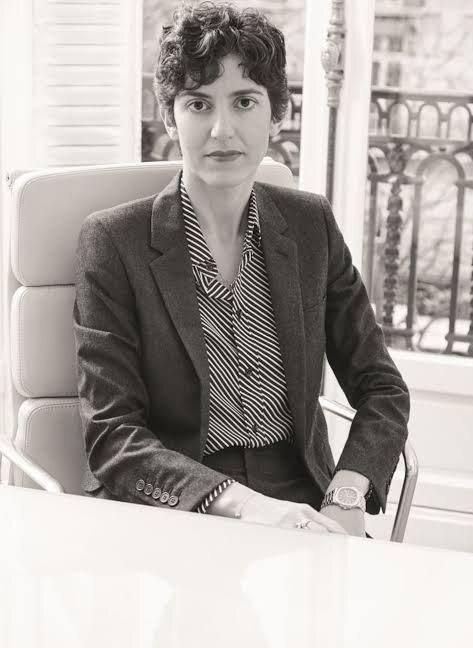
Black and white portrait of Francesca Bellettini
Francesca Bellettini — Portrait President and Chief Executive Officer, Gucci

05 Luxury in Transformation

The industry that made these houses is not the industry they now operate in.

Industry context: the structural shifts that define executive decision-making in global luxury today.

01

A widened definition of the customer

Luxury's audience is no longer well described by a single geography or generation. Purchasing power has broadened across regions and age groups, and with it the range of expectations a house must satisfy simultaneously — about craft, about price, about transparency, about what a brand appears to stand for. Serving that range without becoming generic is the central commercial tension of the period.

02

Cultural relevance as a business input

Houses are now read alongside music, film, sport, art and design rather than apart from them. Relevance in those adjacent cultures has become measurable in commercial terms, which makes it a subject of strategy rather than of marketing alone. The difficulty is that cultural credibility cannot be purchased at the speed at which it can be lost.

03

Digital as infrastructure, not channel

The early framing of digital as an additional sales channel has been replaced by something more demanding: digital as the connective infrastructure of client relationships, inventory, storytelling and service. The consequence is organisational — it changes which functions must talk to each other, and how often.

04

Heritage under active management

Archives, codes and founding narratives are among the few genuinely non-replicable assets in the sector. Their value depends on being used — interpreted, extended, re-presented — rather than preserved untouched. Determining how much reinterpretation an identity can absorb is one of the least formulaic judgements in the industry.

05

Rhythm and volume of production

The cadence of collections, drops, collaborations and communications has accelerated considerably. Sustained acceleration carries a cost in distinctiveness: when everything is an event, the vocabulary of the event weakens. Managing tempo has become a strategic variable in its own right.

06

Responsibility as a condition of trade

Expectations around sourcing, environmental impact, manufacturing conditions and corporate conduct have moved from the margins of the industry to its regulatory and reputational centre. These are now supply-chain and governance questions with direct commercial consequence.

Industry Context General analysis of the luxury sector, presented as editorial commentary. It does not describe or imply any specific strategy, decision or position of Gucci, Kering or Francesca Bellettini.

06 Selected Milestones

The documented record, without embellishment.

Only publicly announced roles and dates appear below. Where a date has not been made public, none is given.

  • EarlyInvestment banking, LondonThe career began in London as an investment banker.
  • Prada GroupBusiness Planning and Development division.
  • Helmut LangOperations Manager.
  • 2003GucciStrategic Planning Director and Associate Worldwide Merchandising Director.
  • 2008Bottega VenetaJoined the house; appointed Worldwide Merchandising and Communications Director in 2010.
  • 2013Saint LaurentPresident and Chief Executive Officer.
  • 2023KeringAppointed Deputy Chief Executive Officer in charge of Brand Development, in September.
  • 2025GucciAppointed President and Chief Executive Officer, announced by Kering in September.

Brand development is often described as a marketing activity. In a luxury group it behaves more like architecture: a discipline concerned with load, proportion and what a structure can be asked to carry.

The questions are structural rather than promotional. Which categories genuinely belong to a house and which merely fit its logo. How far a price architecture can extend in either direction before the top or the entry point loses meaning. Where distribution should end. Which markets deserve concentration rather than coverage.

None of these are decided by taste alone, and none can be decided by data alone. They are judgements about identity made under commercial constraint — which is why brand development, done seriously, sits close to the chief executive rather than beneath the marketing function.

07 Perspectives on Brand Development

What a house can be asked to carry.

Architecture

Category, price and distribution decisions that determine a house's shape before any campaign is written.

Positioning

The long-duration question of where a house stands relative to its peers, and what it declines to compete on.

Creative identity

Consistency of codes across product, image and environment — recognisable without being repetitive.

Client relationships

Service, clienteling and retail experience treated as brand assets rather than as operating costs.

Luxury & brand development

08 Visual Journal

A short sequence of portraits.

A selection from the photographic record. The full archive is held on the Media & Gallery page.

Francesca Bellettini photographed in a black and white editorial study
I Editorial study
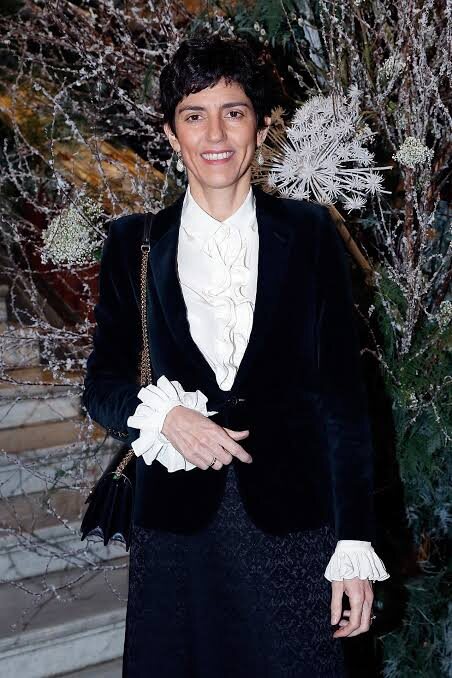
Francesca Bellettini photographed standing at a public engagement
II Public engagement
Francesca Bellettini photographed seated in an office interior
III At work

Enter the media archive

09 Enquiries

Media, speaking and professional correspondence.

All enquiries relating to this website — media requests, speaking invitations and professional correspondence — are handled through a single point of contact.

Contact
Mr. Digant Sharma