Financial analysis
The foundation: understanding how value is created, measured and destroyed in a business, and being able to read a proposition sceptically before committing capital or capacity to it.
JavaScript is required to view this site.
Please enable JavaScript and reload the page.
02 Executive Profile
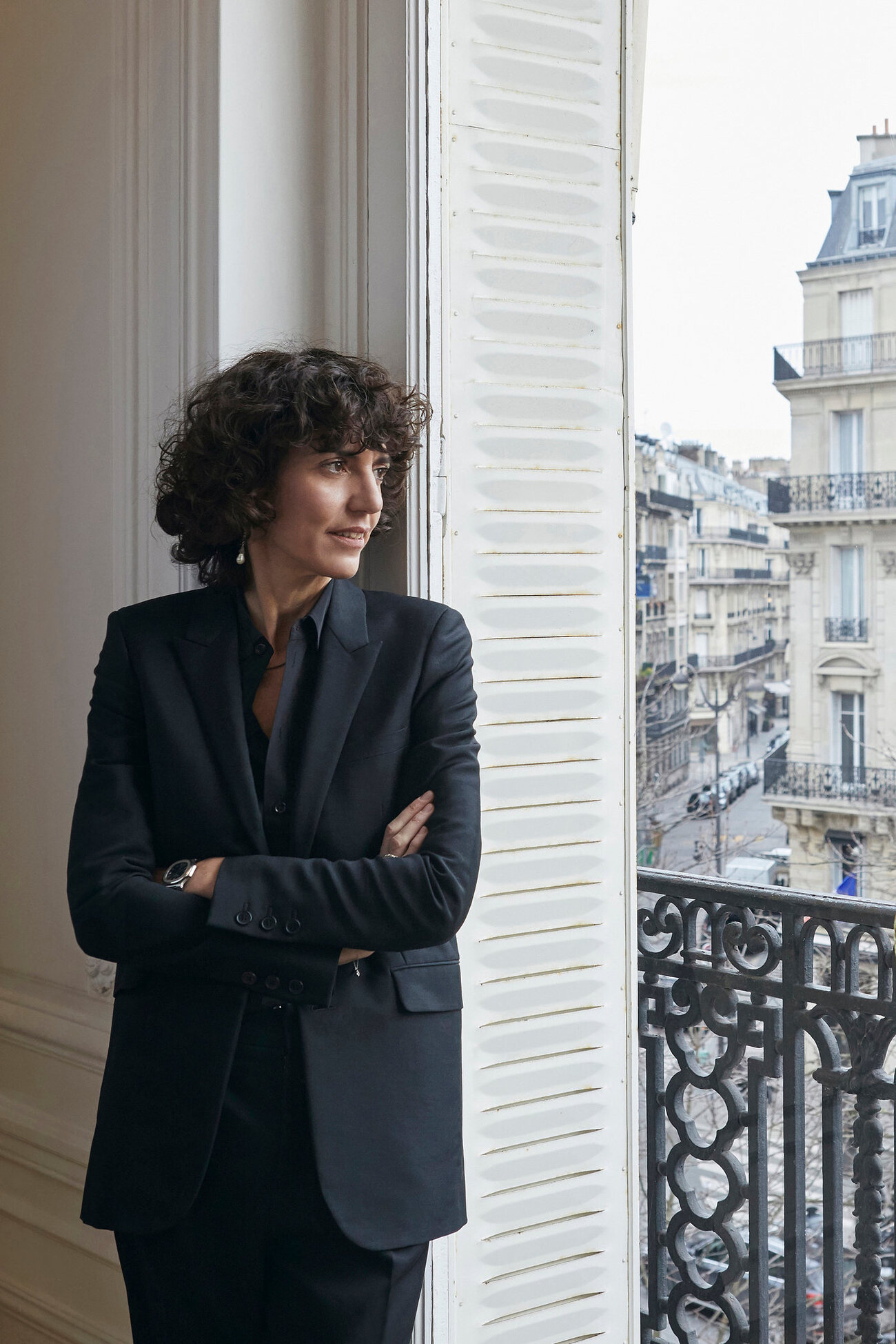
Francesca Bellettini is President and Chief Executive Officer of Gucci, a role announced by Kering in September 2025. She arrives at it with a professional record built almost entirely inside the working machinery of the luxury industry rather than alongside it.
Her career began in London as an investment banker — a training in valuation, evidence and the discipline of having to justify a proposition before acting on it. She then moved into fashion by way of its operating functions rather than its public ones: the Business Planning and Development division of the Prada Group, followed by a period as Operations Manager for Helmut Lang.
In 2003 she joined Gucci as Strategic Planning Director and Associate Worldwide Merchandising Director. In 2008 she moved to Bottega Veneta, where she became Worldwide Merchandising and Communications Director in 2010. From 2013 she was President and Chief Executive Officer of Saint Laurent, and in September 2023 she was appointed Deputy Chief Executive Officer of Kering in charge of brand development.
Set out in sequence, those appointments describe a particular kind of preparation. Each one sits at a junction — between plan and operation, between product and communication, between a single house and a group of them. The through-line is not a specialism but a habit of standing where two disciplines have to be reconciled.
The Record
Every entry below corresponds to a publicly announced appointment. Nothing has been inferred, rounded or filled in.
Announced by Kering in September 2025. She reports to the Chief Executive Officer of Kering.
Appointed in September 2023, in charge of brand development across the group.
From 2013 — a tenure of more than a decade at the head of a single house.
Strategic planning and worldwide merchandising at Gucci from 2003; worldwide merchandising and communications at Bottega Veneta from 2010; operations at Helmut Lang; business planning and development at the Prada Group.
The career began outside fashion, in finance.
International Experience
The organisations in this record are not national companies with export departments. They are international businesses whose identity is rooted in one culture and whose customers, teams and supply chains belong to many.
A career beginning in London and continuing through the Prada Group, Helmut Lang, Gucci, Bottega Veneta, Saint Laurent and Kering is, by its structure, a career conducted across languages, markets and management traditions. That is not incidental to the work. In luxury, the same product must be legible in Milan and Seoul, in Paris and Los Angeles, without becoming a different product in each place.
The executive consequence is a particular kind of judgement: knowing which elements of a house are universal and must never vary, and which are local and should. Getting that distinction wrong in either direction is expensive. Too much local adaptation and a house dissolves into a collection of regional brands; too little and it becomes a foreign object in most of the markets it depends on.

Leadership Approach
The observations below are drawn from the documented sequence of roles. They are the site's reading of a record, not statements made by Francesca Bellettini.
A start in investment banking establishes an early expectation that claims are testable. Carried into a creative business, that expectation is useful in a specific way: it does not replace judgement about taste, but it stops taste from being used as a substitute for reasoning about the commercial consequences of a decision.
Worldwide merchandising responsibility appears twice in this record, at Gucci and at Bottega Veneta. It is among the least visible and most consequential functions in a luxury house: the point at which a creative proposition becomes an assortment, a price architecture and a set of choices about what will actually be produced and where it will be sold.
Holding merchandising and communications under a single remit — as at Bottega Veneta from 2010 — treats what a house offers and what a house says as one proposition. It is a structural position with a clear implication: image is not applied to product afterwards, it is decided alongside it.
Leading Saint Laurent from 2013 meant remaining in place long enough for the effects of decisions to return. Brand building operates on a slower clock than most corporate reporting, and few executives stay long enough to be judged by the full arc of their own choices.
Group responsibility for brand development requires comparison across houses; leading one house requires undivided advocacy for it. Having occupied both positions changes how each is understood — group thinking becomes less abstract, house thinking becomes less parochial.
Luxury Industry Expertise

The foundation: understanding how value is created, measured and destroyed in a business, and being able to read a proposition sceptically before committing capital or capacity to it.
The translation of ambition into a sequence that an operating company can actually execute — with dates, dependencies and an honest account of what will have to be given up.
Direct responsibility for how a house runs. Operational experience is what prevents strategy from being written in a vocabulary that the organisation cannot act on.
The discipline that decides what is made, in what quantity, at what price and for which market — the closest thing in luxury to a house's working definition of itself.
How a house presents itself, and to whom. Held alongside merchandising, it becomes an instrument of coherence rather than a promotional afterthought.
Chief executive responsibility for a house, and subsequently group-level responsibility for brand development — the point at which all of the above must be held simultaneously.
Strategic Perspective
In luxury, the hardest strategic decisions are rarely about what to add.
Industry context — general commentary on strategy in the luxury sector.
The value of a luxury house rests in part on restraint — on the categories it does not enter and the volume it does not pursue. Growth strategies that ignore this can produce a good year and a weaker decade.
Consistency across product, retail environment, image and service accumulates slowly and quietly. It is the reason two houses with comparable resources can arrive at very different positions after ten years.
Identity cannot be accelerated. A house can move quickly on distribution, technology and communication, but the thing that makes those investments worthwhile is built at a pace that cannot be purchased.
The Professional Journey
The full chronological account, with the reasoning behind each chapter, is set out on the Career Journey page.